Summary
In this month’s newsletter, we report on Amnesty’s work to highlight human rights violations in Brazil in the context of the Olympic Games. We also feature developments in Colombia, where the welcome ceasefire has not brought an end to human rights abuses. There are also brief updates on the eviction from their land of an indigenous group in Brazil, continuing efforts to secure the release of Belén from prison in Argentina and other developments in Venezuela (including a disturbing move towards forced labour) and Peru.
Brazil
Much recent work on Brazil has been focused on the human rights violations which spike in the context of public security operations around sporting events – this year the Olympics. Earlier this month, Ellie May, Country Coordinator for Brazil, and Jon Cornejo, Amnesty UK Campaigner, met with the Human Rights Attaché at the Brazilian Embassy to discuss the issues raised in the report “Violence Has No Place in These Games” released in June. The meeting was productive, including the Brazilian authorities being keen to collaborate with Amnesty International to understand how they can tackle the issues of police violence.
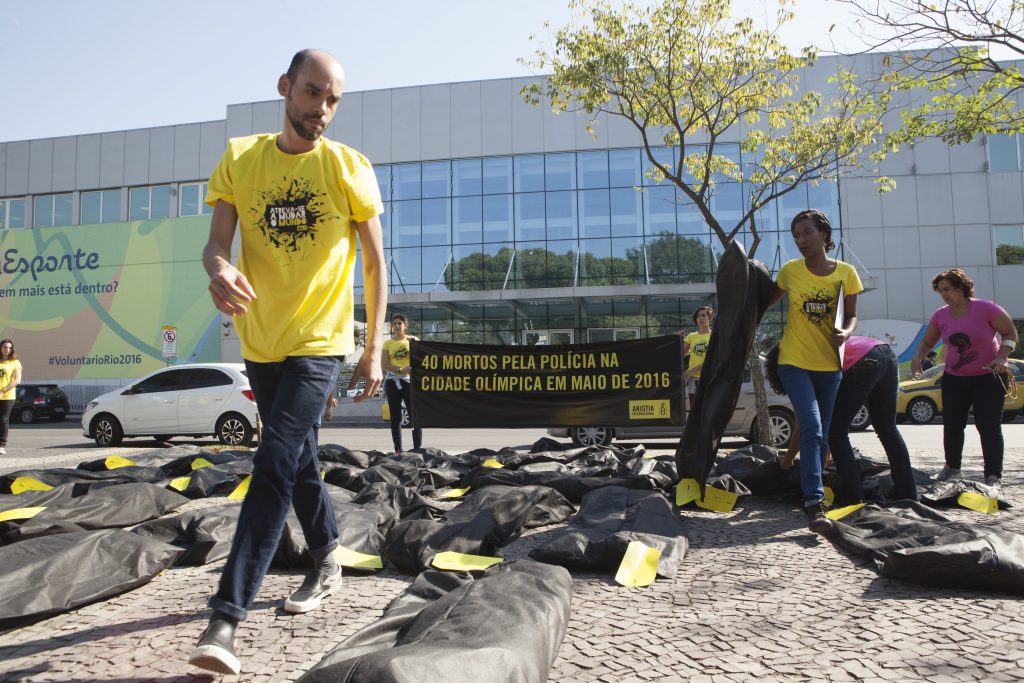 At the end of July, Amnesty International Activists delivered 40 body bags to the offices of the Olympic Organising Committee – one for person killed by the police this May in Rio de Janeiro. It marks another high profile act by Amnesty Brazil to raise concerns around the increased risk of human rights violations the context of the Rio 2016 Olympics after abuses were documented in relation to the 2014 World Cup and the 2007 Pan American Games. They also delivered a petition signed 120,000 people from more than 15 countries demanding public security policies that respect human rights during the Olympics. You can read full story on the Amnesty Website.