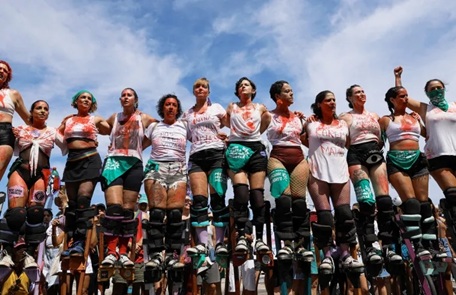
This month we bring you news from Argentina, Brazil, Chile, Colombia, Ecuador, Peru, and Venezuela, as well as one story impacting across the region.
Highlights are:
- Across the region, in a new report, Tearing Up The Social Fabric, Amnesty has documented how State authorities in the Americas have promoted and enacted a growing number of laws that restrict or control civil society organisations
- In Argentina, on the 50th anniversary of the 1976 military coup, tens of thousands marched in Buenos Aires and across the country to honour victims of the dictatorship.
- International Women’s Day marches in Brazil served as a rallying cry against gender-based violence, fuelled by the latest case to outrage the country involving the alleged gang rape of a 17-year-old girl in Copacabana.
- For Chile, there is a new Urgent Action, calling for the new president to ensure accountability for all serious human rights violations and crimes under international law and to refrain from pardoning convicted former Carabinero and military officials.
- Human rights defenders in Colombia have been subjected to unrelenting violence over the past decade, with on average just under 100 killed every year, a report issued by the UN Human Rights Office finds.
- For Ecuador, the United Nations Committee on Enforced Disappearances assessed the progress and challenges faced by Ecuador in preventing, investigating and punishing enforced disappearances. Amnesty submitted informationto the Committee.
- The Inter-American Court of Human Rights has condemned Peru over the death of its citizen Celia Ramos, who died at the age of 34 in 1997 after undergoing sterilisation “under coercion”.
REGIONAL
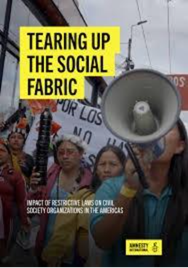 In a new report, Tearing Up The Social Fabric, Amnesty has documented how State authorities in the Americas have promoted and enacted a growing number of laws that restrict or control civil society organisations, reinforcing authoritarian practices that threaten freedom of association and curtail civic space. The report documents how new laws in Ecuador, El Salvador, Nicaragua, Paraguay, Peru and Venezuela are leading to self-censorship, weakened citizen participation and oversight, and erosion of the social fabric as trust and community networks break down, while victims of human rights violations are left unprotected.
ARGENTINA
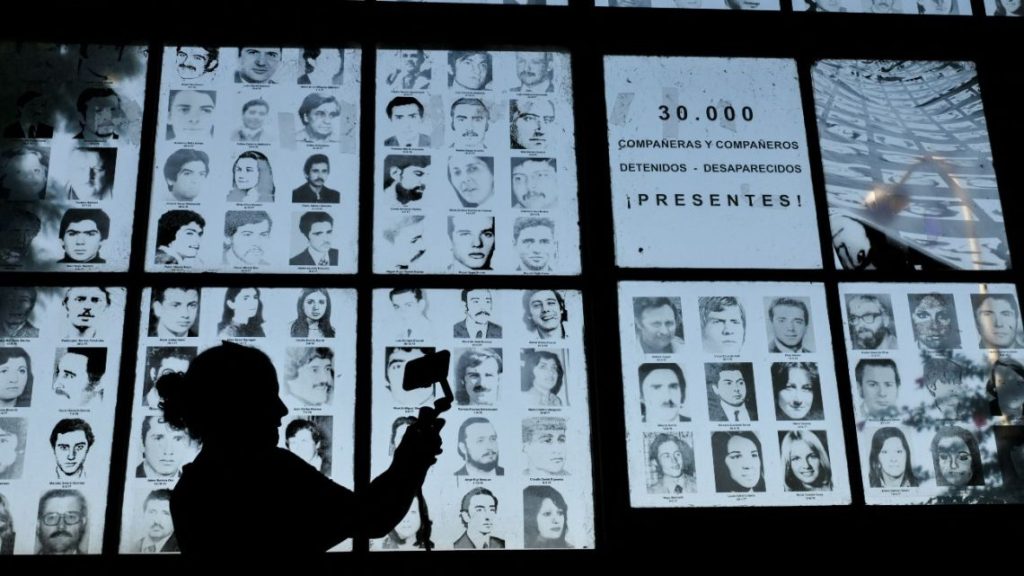
On March 24, the 50th anniversary of the 1976 military coup, tens of thousands marched in Buenos Aires and across the country to honour victims of the dictatorship, while human rights groups and international experts warned of setbacks in ongoing efforts to secure truth and justice. Human rights organisations estimate that 30,000 people were disappeared during the dictatorship. At least 500 newborn babies were also stolen from prisoners and given to military families to raise, with some unaware to this day of their true identity. [Read more…]
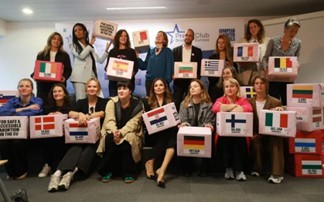 The vote could pave the way for funding thousands of European women who travel every year to another EU country to access abortion care.
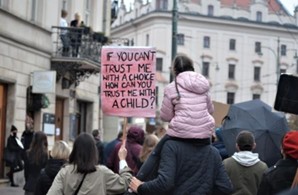 The European Court of Human Rights (ECHR) has ruled that Poland violated the rights of a pregnant woman who had to travel abroad to obtain an abortion after her foetus was diagnosed with a birth defect. It is the second time that the court has issued a judgment against Poland relating to its near-total abortion ban.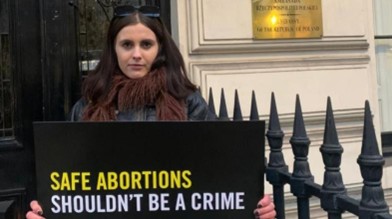

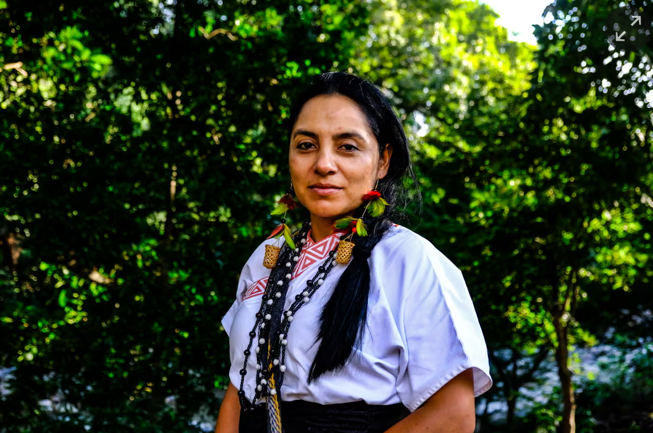
 Amnesty released two Urgent Actions relating to Colombia in December. The first regarding serious risks to the life, safety, and security of the peasant communities of El Porvenir and Matarratón; the second relating to serious attacks on members of the Inter-Church Commission for Justice and Peace while engaging in human rights defence activities in Southwest Colombia. Please take action