Amnesty International Bournemouth Poole Christchurch Group

local news & events Amnesty International group for Bournemouth, Poole & Christchurch

  • Home
  • Events
  • Action
  • Newsletter
  • Why A.I.?
  • Contact
  • Privacy
    • Terms Of Use
    • Privacy Policy

Europe Newsletter August 2024

August 9, 2024 by zarganar

Dear Amnesty activists and supporters. The Olympic games should be a time of celebrating diversity, but the French ban prohibiting Muslim women from wearing sports hijabs is excluding French athletes from taking part. Please join the on-line campaign to end discrimination in France. For any inquiries about France please contact our coordinator for Western Europe Jovana Bosnjak Jovana.Bosnjak@amnesty.org.uk

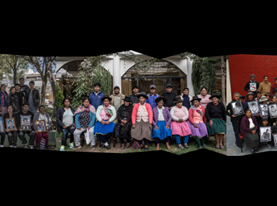
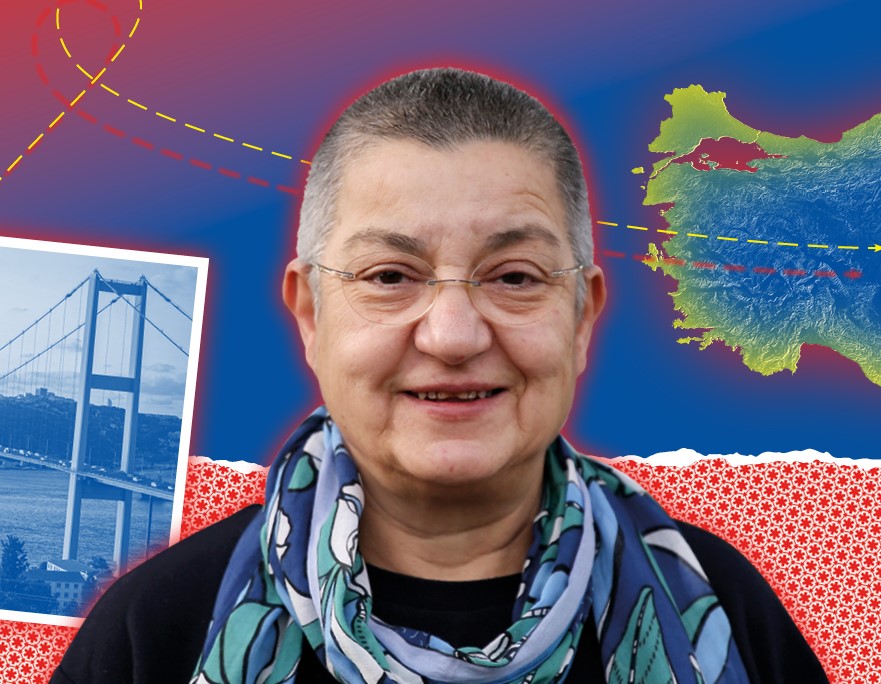
We also have a postcard action supporting the Saturday mothers in Turkiye. Please print the attached postcard templates and send cards to the Interior Ministry of Turkiye. For further questions please contact Chris Ramsey country coordinator for Turkiye  chris.ramsey@amnesty.org.uk

How we respond to refugees fleeing wars and oppression defines us as a society and civilization. On 14th of June vigils and demonstrations were held in many European countries including Greece, Denmark, Germany, France, Bulgaria, Turkey, UK and others to call for justice for the 600 people who drowned when the “Adriana”, a clapped out fishing boat packed with refugees including many children, sank near Pylos Greece. Investigations by Amnesty, Human Rights Watch and the BBC point to the culpability of the Greek authorities particularly the Hellenic coastguard for this horrendous and preventable loss of life.  Just this week Amnesty released a report investigating the suffering of people detained in the EU-funded Closed Controlled Access Centres in Samos Greece. And in Finland a new law on migration is a green light for violence and pushbacks at the border. For more information please contact Ulrike Schmidt Balkan and regional team coordinator Ulrike.schmidt@amnesty.org.uk

In Poland refugees are still dying in the forests pushed back and forth by Belarussian and Polish border guards. Refugees from Afghanistan, who have often helped Western troops and are persecuted by the Taliban are not receiving the welcome that Ukrainian refugees rightly receive. Used by Belarus and forcibly returned by Polish border guards refugees from Afghanistan, Iraq, Syria and other oppressive and war-torn countries are forced back and forth over the border. Many, including children have died in the swampy and unforgiving forests. Our new coordinator for Central Europe Lucja Jastrzebska is giving us overview and updates. For further information please contact lucja.jastrzebska@amnesty.org.uk

Finally Amnesty has released a detailed report called “Under protected and over restricted“ about the right to protest in 21 countries. Chris Ramsey, our coordinator for Turkey  has worked through the 209 pages of the report for us and produced a more digestible summary for us. For further inquiries please contact chris.ramsey@amnesty.org.uk.

Malta

El Hiblu update :

Apologies to all the groups who expressed an interest in adopting the El Hiblu 3. The Action circular on the case has still not been issued, and I finally received an answer from the research team: The courts in Malta are currently hearing preliminary issues, following the attorney generals decision to indict the El Hiblu 3. The first preliminary issue is that they are examining whether Malta has jurisdiction over the case. At the moment all we can do is wait. I will keep you updated as soon as I receive more information. In the mean-time all we can do is continue to write solidarity messages. [Read more…]

Filed Under: amnesty international, Europe Newsletters, newsletter

South America Newsletter July 2024

July 8, 2024 by zarganar

This month we bring you news from Argentina, Bolivia, Brazil, Ecuador, Suriname, and Venezuela. 

Highlights are: 

  • Amnesty has raised an alarm about the proliferation of legal initiatives to curtail the work of civil society organisations in Latin America and which seriously threaten the efforts of these organisations to promote and defend human rights in the region. 
  • In Argentina, a violent police operation during protests on 12 June resulted in 33 people being arbitrarily detained and charged with several offences, including attacks on constitutional order and democratic life. Amnesty International has issued an Urgent Action urging the prosecutor to immediately drop the charges against them. 
  • Following reports of a failed coup attempt in Bolivia, UN Human Rights Chief Volker Türk expressed deep concern at the news, calling on Bolivian authorities, including the armed forces, to ensure full respect for human rights under all circumstances 
  • El Pais (English version) reports on the findings of the Gamboa case in Brazil where three police officers are charged with the killing of three young Black individuals during Carnival in 2022. 
  • Yuly Velásquez, President of FEDESPAN (Federation of Artisanal, Environmental, and Tourist Fisherfolk of Santander Department), received AI Germany’s human rights award on 4 June. 
  • Amnesty has submitted a briefing to the UN Committee against Torture setting out its main concerns with regard to the current crisis within Ecuador’s prisons. 
  • There will be a new Amnesty report this month focusing on demanding justice and accountability for the victims of the military and police repression of the 2022/23 Peruvian protests. 
  • According to a report from Dialogue Earth, Suriname is the only remaining country in South America that has yet to enshrine Indigenous land rights in its constitution. 
  • The United Nations published an update denouncing the growing restriction of civil liberties in Venezuela, especially before the election later this month. 

REGIONAL 

Amnesty has raised an alarm about the proliferation of legal initiatives to curtail the work of civil society organisations in Latin America and which seriously threaten the efforts of these organisations to promote and defend human rights in the region.  Taking cues from questionable, regressive and authoritarian measures that certain countries in the region have adopted, the parliaments of Paraguay, Peru and Venezuela are currently considering passing laws that would arbitrarily restrict and unduly interfere with civil society organizations, associations, and groups. These measures threaten to silence criticism, compromise the pursuit of justice and undermine progress on human rights.  [Read more…]

Filed Under: amnesty international, newsletter, South America Newsletter

Group Newsletter July 2024

July 2, 2024 by zarganar

Welcome to the latest newsletter.
Our next meeting  is on Thursday 4th July 2024, 7.30pm – 9.00pm at Moordown Community Centre. We will catch up on campaigns, letter writing, and discuss new ideas about campaigning. We don’t meet in August.

Future Events

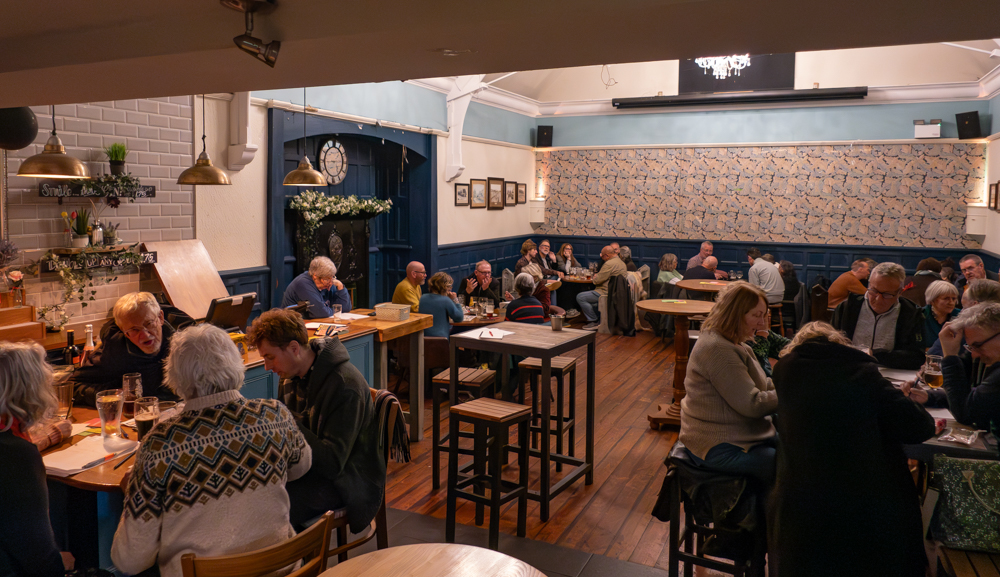
After lasts years success, we have now booked for this years Jamnesty on

Saturday 7th September at Chaplin’s Bar

Last year was our first Jamnesty, but we still had a fantastic day with 11 bands and 6 poets – and we raised over £1600! This year we don’t have to contend with the Air Show and can build on worked best last year. So still plenty of cakes! We will soon put up details of the performers, etc on our Events page. Please contact us if you would like to help on the day.

We had planned to return to BourneFree, which is next Friday and Saturday.
Unfortunately the organisers now insist stalls have to be set up (and run) over both days of the Festival. We don’t have enough volunteers to do this, so cannot now have a stall. We are obviously are unhappy at effectively being excluded for not being “corporate” enough!

Young girls at a Women-Friendly Space at a Rohingya refugee settlement
in Cox’s Bazar, Bangladesh

I Don’t Agree with Nick

In 2017, almost one million Rohingya refugees were forced into Bangladesh from Myanmar following wide scale persecution, Human Rights violations, extrajudicial killings, summary executions, arson of Rohingya villages and schools, and diverse other atrocities.
Leading up to the 2017 atrocities, Facebook became an echo chamber of virulent anti-Rohingya content, which Meta was warned about repeatedly. The Myanmar authorities even temporarily blocked the Facebook platform in 2014 because of its role in fuelling ethnic violence and “instigation” during the Mandalay riots. Meta failed to take meaningful action.
The Rohingya community have asked for $1 million US dollars as part of a remedy to help fund educational projects for refugee children – a drop in the ocean to Meta, but a life changing intervention to hundreds of thousands of children.
Our group have written to Nick Clegg, the former Deputy Prime Minister, and now the President of Global Affairs of Facebook. Download the letter and write to Nick in London. Or you can sign the AIUK petition
https://www.amnesty.org.uk/activist-actions/Meta-remedies

[Read more…]

Filed Under: amnesty international, Group Newsletter, newsletter

AIUK Human Rights Manifesto

July 1, 2024 by zarganar


From AIUK:-  “The UK is set to head to the polls for the first general election since 2019 and much has happened since then. At home, we have seen a huge rollback in human rights protections with our rights being chipped away, often in contradiction to the UK’s obligations under international law. A fundamental change of direction is needed on human rights and a general election provides an opportunity for this to take place.

If the UK is to be seen as a champion of human rights, the next government must be ambitious and progressive with regards to rights protections.  It is an essential task, but not an easy one, which is why Amnesty International UK has created a human rights manifesto – a range of commitments that we are calling on political parties to adopt and deliver should they form the next UK government.”

Read the AIUK Manifesto

Filed Under: amnesty international

South America Newsletter June 2024

June 10, 2024 by zarganar

This month we bring you news from Colombia, Venezuela, Argentina, Ecuador, Brazil, Chile, Paraguay and Peru.

Highlights are:

  • Colombia: More from Amnesty on the need for police reform, opening with a song and dance video to remind us of the violence suffered by demonstrators during the General Strike.
  • Colombia: The government uses a mixture of negotiation and force to halt the ongoing violence in the country.
  • Venezuela: Please respond to the Urgent Action demanding medical care for three political prisoners who have been deprived of treatment for months.
  • Argentina: Please sign an Urgent Action demanding the release of a lesbian human rights activist charged with painting graffiti.
  • Argentina: In a second Urgent Action, Amnesty is demanding the withdrawal of a new pensions’ law which would deprive most pensioners of their pension.
  • Ecuador: In this Urgent Action, Amnesty is demanding that the Ecuadorian authorities protect nine girls and their families without demanding they first abandon their activism.
  • Brazil: More on police killings, this time in Sao Paulo, and how corrupt police are helping to despoil the Amazon.
  • Chile: Amnesty is calling for a full investigation of three senior officers of the Carabineros for their excessive use of force during the 2019 demonstrations.
  • Paraguay: In a new report, Paraguay’s Bill of Health, Amnesty has identified that severe and unequal gaps in access to Paraguay’s public health system.
  • Peru: The Peruvian government published a presidential decree classifying trans identities as mental health conditions.

COLOMBIA

José Hernan Tonorio Mestizo, indigenous youth leader, killed 4 July 2023, Cauca.

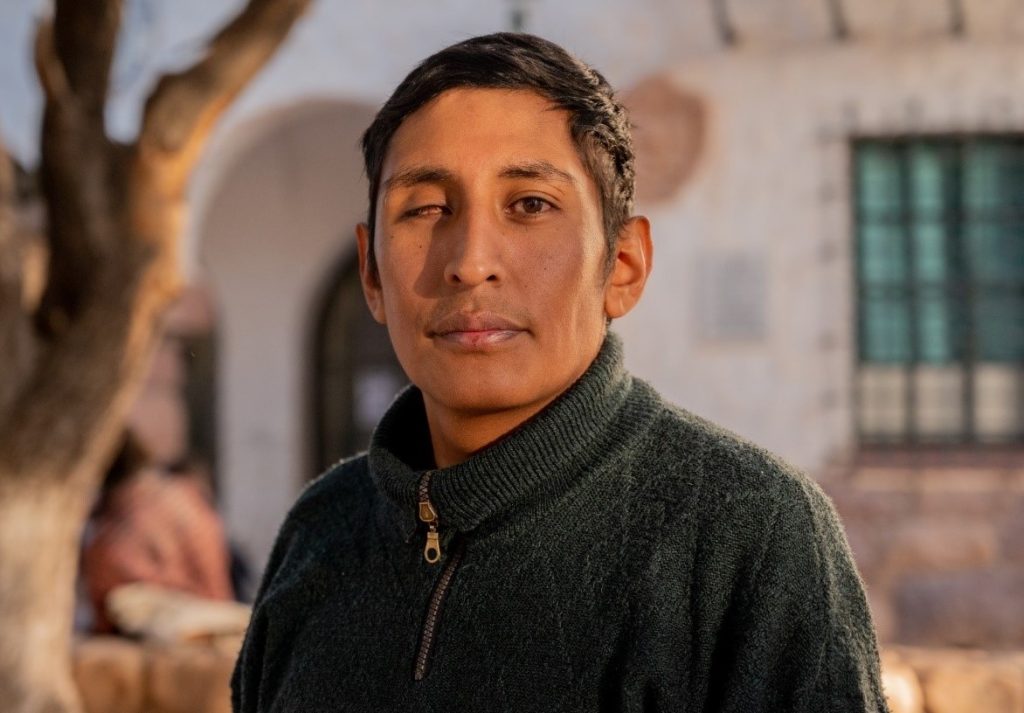
Amnesty International has issued a new report on grave abuses committed by the police during the National Strike of three years ago. This opens with musicians and dancers performing to remind us of the violent events where their leader lost an eye to a rubber bullet. Protesters were killed, others lost their eyes or were sexually abused. Many of these injustices remain unpunished. Some who reported the abuses have been threatened and had to flee the country. How is it possible that a police reform that ensures that these events never happen again is not part of today’s political agenda?’

Programa ‘Somos Defensores’ (We are the Defenders) lists the 168 social leaders and human rights defenders killed by ex-guerrillas, paramilitaries and criminal gangs in 2023, a 14% decline on 2022. However, the number of forced displacements doubled while there was also an increase in kidnappings and forced disappearances. Overall, there was no letting up in the violence in mainly rural areas previously occupied by FARC guerrillas, and now fought over by two FARC dissident groups, the ELN (National Liberation Army), Gaitanista paramilitaries and organised crime.

President Petro is persisting with peace initiatives and Colombia has signed the first point of a six-point deal with ELN guerrillas, following five cycles of negotiations over the last seven years. The agreement last June to set up a National Participation Committee with 80 meetings with 8,500 representatives of social organisations and communities enabled this first breakthrough.

Colombia has also announced peace talks with Iván Marquéz, former FARC leader who reneged on the Peace Accord and founded a new guerrilla group called the Segunda Marquetalia, a reference to the town of Marquetalia, where the FARC originally came from. Talks begin on 24 June in Venezuela. However, neither side has declared a ceasefire. Meanwhile, another ex-FARC group, known as EMC (Central High Command), attacked police stations and towns in several places in the Cauca region. The government sent in the Army with the President warning them that “the offensive against the EMC is total”.

The Guardian reports on the starvation of children of the Wayúu indigenous community in La Guajira. ‘Although their resource-rich environment includes assets such as coal and gas and stunning Caribbean beaches, the lack of food and water available in this arid region has left the Wayúu facing a humanitarian crisis.’ Investigators found that the inadequate supply of water is the result of corruption and the lack of trucks and deposits to supply over 1,000 communities and a population of one-third of a million.

Following a 10-day visit, UN experts urge the Government of Colombia to address systemic and institutional racism of people of African descent which they have endured for centuries. Testimonies detailed sexual and gender-based violence, rape as a weapon of war, macro-aggressions, kidnappings, femicides, brutal killings by armed groups and organised crime cartels, extortion, brutal dispossession of lands, forced recruitment of children in armed groups, enforced disappearances, enforced displacement, mutilation and utilisation of children for illegal activities. [Read more…]

Filed Under: amnesty international, newsletter, South America Newsletter

  • « Previous Page
  • 1
  • …
  • 7
  • 8
  • 9
  • 10
  • 11
  • …
  • 67
  • Next Page »

Categories

Copyright © 2026 · Outreach Pro on Genesis Framework · WordPress · Log in

Facebook
Facebook
fb-share-icon