Dear Amnesty activists and supporters,
HAPPY NEW YEAR from the Europe Team. Here is our latest newsletter with updates and actions.
European Parliament votes to expand access to abortion in historic ballot
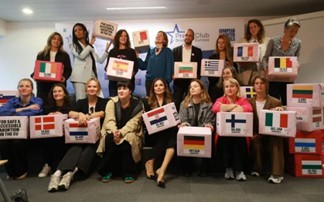 The vote could pave the way for funding thousands of European women who travel every year to another EU country to access abortion care.
Read more here:
https://www.politico.eu/article/europe-votes-to-expand-abortion-access-in-historic- vote/
Poland
European Court of Human Rights rules on violation of rights due to near-total abortion ban
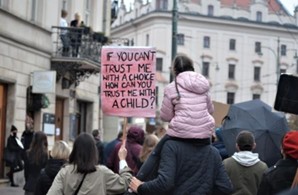 The European Court of Human Rights (ECHR) has ruled that Poland violated the rights of a pregnant woman who had to travel abroad to obtain an abortion after her foetus was diagnosed with a birth defect. It is the second time that the court has issued a judgment against Poland relating to its near-total abortion ban.
Read more – https://notesfrompoland.com/2025/11/13/european-court-rules-poland- violated-rights-of-woman-who-traveled-abroad-for-abortion/
Documentary on intergenerational trauma, memory, and Poland’s fight for women’s bodily autonomy.
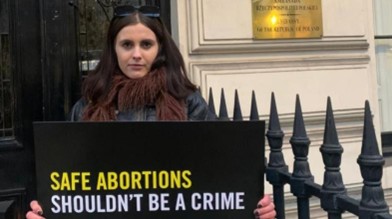
We are inviting you support a documentary on intergenerational trauma, memory, and Poland’s fight for women’s bodily autonomy.
The documentary brings together family members from different generations, activists and experts to explore how bodily autonomy has become tied to ideas of nationhood, motherhood and survival.
The aim is to make a film that feels honest and grounded rather than sensational, made by our CC for Central Europe Lucja, who wants audiences to understand Poland’s current abortion debate as part of a longer story about memory, control and survival. This will reflect on how inherited trauma can continue to shape political choices.
Support and read more here:
https://www.crowdfunder.co.uk/p/intergenerational-trauma-and-abortion- in-poland-do#
The Crowdfunder is only open until 3rd Feb 2026.
If you’d like to help fundraise, please contact Lucja.jastrzebska@amnesty.org.uk to facilitate speaking events on abortion rights in Poland.
Once the film is completed, there will be opportunities for screening available.
Thank you for your ongoing support!
TÜRKİYE
Court acquits İstanbul Bar Association board on trial over a statement regarding killed Kurdish journalists
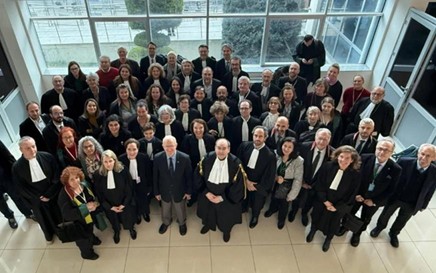
On the 9 January an Istanbul court acquitted Istanbul Bar Association Chair İbrahim Kaboğlu and 10 board members in a case involving charges of “making terrorist propaganda” and “public dissemination of misleading information.” The board members had faced up to 12 years in prison.
Reacting to the decision, Esther Major, Amnesty International’s Deputy Director for Research in Europe said:
“The decision to acquit the Istanbul Bar Association leadership of these unfounded charges is welcome news. This case was a clear misuse of criminal law and should never have been brought in the first place.
“For years, bar associations and lawyers in Türkiye have been targeted simply for carrying out their professional duties and speaking out in defence of human rights and the rule of law. While today’s ruling brings relief, it does not erase the chilling effect these proceedings have had and the harm experienced by the individuals subjected to this.
“Türkiye’s overly broad anti-terrorism laws are open to abuse and are frequently used by the judiciary to clamp down on protected rights.
These laws must be urgently reviewed and brought in line with Türkiye’s international human rights obligations, including to ensure that the domestic legal framework protects and facilitates the exercise of the rights to freedom of peaceful expression, peaceful assembly and freedom of association.”
The trial took place at the İstanbul 26th Heavy Penal Court within the Marmara Closed Penal Institution complex in Silivri on the outskirts of İstanbul. Representatives from 30 bar associations and 17 international legal unions from 83 countries monitored the hearing.
In the hearing, the judges ruled that the elements of the alleged crimes had not been established. Following the announcement of the ruling, lawyers in the courtroom chanted, “Defence has not remained silent and will not remain silent.”
The case originated from a Dec 19, 2024 airstrike in northern Syria that killed journalists Cihan Bilgin and Nazım Daştan. While the Turkish government did not claim responsibility for the attack, Turkey had been regularly conducting targeted airstrikes in Syria’s northern and eastern regions controlled by a Kurdish-led autonomous administration, which Ankara views as a “terrorist” entity.
Following the deaths, the İstanbul Bar Association released a statement emphasizing that targeting journalists in conflict zones violates international humanitarian law and the Geneva Conventions. The Bar stated that attacking civilians not engaged in hostilities constitutes a war crime under the Rome Statute.
Prosecutors subsequently indicted the board members, alleging that the journalists were members of the Kurdistan Workers’ Party (PKK) militant group. The indictment claimed the bar portrayed the journalists as civilians to “legitimize the use of violence” by a terrorist organization and argued the statement “disturbed public order.”
Gezi PoC Tayfun Kahraman hospitalized after multiple sclerosis attack
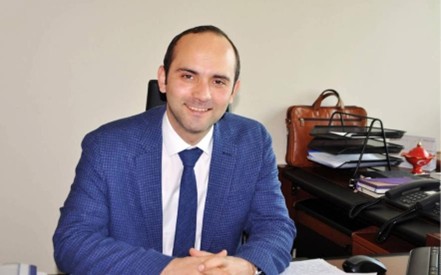 Tayfun Kahramanwho has been in prison since Apr 25, 2022, following the Gezi Park trial, was hospitalized following a multiple sclerosis (MS) attack, according to a medical report.
Kahraman, a city planner and one of the defendants in the widely debated Gezi case, was admitted to İstanbul University Cerrahpaşa Faculty of Medicine. The report stated that he showed signs of “hypoesthesia and paresis in the lower left extremity,” prompting his hospitalization for further tests and treatment.
“The patient was hospitalized with a preliminary diagnosis of MS attack due to the detection of hypoesthesia and paresis in the lower left extremity during his recent examination,” the report said, noting that Kahraman has been under follow-up since 2005 for MS.
Journalist Murat Sabuncu, who said he had reviewed the report and consulted a neurosurgeon, noted that numbness and weakness in Kahraman’s left leg could suggest a new lesion in the brain or spinal cord. In Jul 2025, the Constitutional Court ruled that Kahraman’s right to a fair trial had been violated and called for a retrial. However, the 13th İstanbul Heavy Penal Court did not implement the ruling. No action was taken even after the reasoned decision was published in the Official Gazette on Oct 17, 2025.
Cansu Çifçi, Kahraman’s lawyer, cited his deteriorating health, time already served, and the Constitutional Court’s decision as grounds to request his release pending trial. His wife, Meriç Kahraman, has repeatedly appealed to the public about both his medical condition and the failure to enforce the top court’s ruling. (AB/VK)
Osman Kavala (Gezi PoC): Next steps at the European Court of Human Rights
As many of you will be aware, following his detention in October 2017 and subsequent conviction in the Gezi Park trials Osman Kavala remains in prison despite two “binding” judgements from the European Court of Human Rights (in 2019 and 2022) holding that his detention is arbitrary and serves only political purposes. Even following the failure of the Turkish government to respect these judgements the Council of Europe has shown great reluctance to take significant action against Türkiye which (in theory) could involve the country being expelled from the Council.
In the latest twist the Chamber of the European Court (effectively a panel of judges) that was dealing with his case has now passed it (“relinquished it” in ECHR terminology) to the most senior body at the court, the Grand Chamber.
That body has now decided that it will hold a hearing regarding Osman’s case on 26 March 2026. At this stage it is impossible to predict what will be the outcome but Amnesty will be keeping a very close eye on this.
Osman Kavala: Interview during Human Rights Week 2025
“ Respect for rights is the first condition for lasting peace and genuine democracy”
Speaking to Turkish online news site Bianet during Human Rights Week (December 10–17), Osman Kavala said,
“For lasting peace and the creation of a culture of democracy, an understanding that values human life, human dignity, and human rights must also become tangibly felt.”
“In the struggle for human rights, it is not always possible to reach the intended goals. But in every case, this effort fulfills the function of being the conscience of the public and gives society morale and hope.”
Osman was answering questions from Marmara Prison and provides important insights into the human rights situation not just in Türkiye but worldwide.
You are known both globally and in Turkey for your work in civil society and as a defender of rights. How did your journey of struggle begin?
I finished high school in 1975. I was able to start at the Middle East Technical University (METU) only in March 1976 because there was a boycott. When a new boycott began in 1977 and dragged on, I decided to go to the UK. At that time, I did not yet have an understanding that the concept of human rights had significant weight in politics.
As Philipp Sarasin describes in his book 1977 translated by Tanıl Bora, these were years when human rights discourse was gaining strength in Western Europe. President Carter and NATO circles were using this discourse largely to weaken the Soviet bloc, but within civil society and grassroots organizations of political parties, sensitivity toward violations of rights in Latin American dictatorships and South Africa’s apartheid regime was also growing.
The UK, of course, is the birthplace of Amnesty International, the most prominent human rights organization, and probably the country with the most widespread and active social networks of this kind. Amnesty and similar initiatives have strived to raise awareness—especially among people not deeply engaged in international politics—about violations of rights in other parts of the world, encouraging them to express their reactions and solidarity through sending messages.
While at the University of Manchester, I participated in the Student Union activities as a representative of the overseas students. Through this, I learned more about the repression in the countries from which students came, which they were obliged to leave.
After the 1980 military coup in Turkey, we organized campaigns aimed at exposing torture and violations of rights and encouraging civil and political organizations in Europe to take effective positions to prevent them. During this process, we had intensive contact with organizations concerned with human rights, especially the Amnesty International.
As a result, I returned to Turkey with a clearer understanding of the concept of human rights and with some experience working in this field. I took part in the foundation of the Helsinki Citizens’ Association. Over time, however, contributing to the values of peace and democracy through activities in the arts and culture became my priority. For this reason, claiming to be a fully-fledged human rights defender would be unfair to friends who have carried out this struggle with great dedication and self-sacrifice.
As a rights defender who has been imprisoned for years despite ECtHR rulings, how do you assess the past and present of the human rights struggle?
When we look at the last fifty years from a bird’s-eye view, we see changes in the nature of rights violations. It can be said that extrajudicial killings have largely come to an end, and the practice of torture, though not completely eliminated, has been reduced significantly. On the other hand, violations of rights within judicial processes have become widespread. Deaths in workplaces and femicides continue without decreasing.
Turning a blind eye to buildings that are not earthquake-resistant, the failure to effectively inspect workplaces that endanger workers’ lives, and social facilities that lack necessary fire safety measures all indicate that the obligation to protect citizens’ lives is not being adequately fulfilled and sufficiently valued. Keeping people in prison for years without concrete evidence that they have committed a crime is also a sign that human life is not valued.
On the one hand, peace and democracy are on the agenda; on the other, rights organizations report an increase in violations. There are also criticisms that the space for civil society is shrinking. Do you see this as a contradiction?
It is true that ending conflicts, and acts of terror brings significant relief to social psychology and social relations. However, for the creation of a peace and democracy culture that will have a permanent impact on the society, an understanding that values human life, human dignity, and human rights must also be tangibly felt by all citizens.
Gezi Prisoners of Conscience Solidarity Action
As you know I have asked people to engage with our solidarity work in respect of the Gezi Prisoners of Conscience on many occasions. The responses fellow activists are getting show just how valuable and appreciated this work is . Yet again in the last few weeks we have had yet more responses particularly and I have copied some into this document.
As well as the positive, morale boosting impact of this work for the prisoners themselves it is incredibly important in showing the Turkish authorities that there is still considerable international concern about these exemplar cases and that organisations like Amnesty are not about to stop drawing attention to the egregious human rights abuses in Türkiye.
Accordingly can I urge you again to become involved with this action in 2026. Here are the addresses for the solidarity actions and reminder that items need to be sent using the “track and signed for” Post Office service to maximise the chance that they will get through. Please try to cover all 5 prisoners.
Europe: Closing the door? How visa policies in Europe’s Schengen area fail human rights defenders
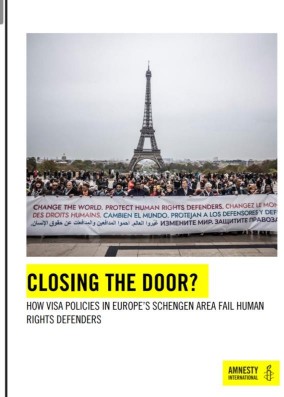 Amnesty International’s report, “Closing the door? How visa policies in Europe’s Schengen area fail human rights defenders,” details how complex, costly, and discriminatory Schengen visa processes block human rights defenders (HRDs) from Africa, Asia, and the Middle East from attending vital global forums, despite EU flexibility provisions in the Visa Code. The report calls for implementing revised guidelines, training visa officers, and creating fast-track processes to ensure these activists, often racialized as Black, Asian, or Muslim, can exercise their right to defend rights, as current practices amount to indirect discrimination.
The report outlines several obstacles in the visa process. One of the first is identifying where to submit an application, as many Schengen states lack embassies or visa agreements in every country. This forces applicants to travel to other nations at significant financial and personal risk. Lengthy waiting periods, limited visa validity, and last-minute approvals further complicate travel. Applicants also face strict documentation requirements—such as proof of income, employment, or property ownership—which are difficult for many activists who work voluntarily or live in precarious economic conditions.
These systemic issues, Amnesty argues, amount to indirect racial discrimination. Although the visa rules appear neutral, they disproportionately impact people from countries whose populations are racialized as Black, Asian, or Muslim. As one Dalit woman defender from Nepal told Amnesty, requiring financial proof such as bank statements excludes many grassroots activists who live day to day but play crucial roles in human rights advocacy.
Greece
Saving lives is not a crime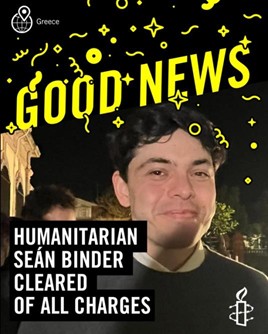
After more than seven long years, Seán Binder has been cleared of all charges.
For the past seven years, Amnesty members and supporters around the world have campaigned relentlessly on Seán’s case, taking action, raising their voices, and
standing firm in the belief that saving lives is not a crime. Today, we celebrate this long-overdue victory together.
Seán’s life was put on hold by charges that should never have been brought. Today’s decision sends a clear message: providing life-saving humanitarian assistance is an obligation, not a crime. Human rights defenders must be protected, not persecuted.
Since 2018, human rights defender Seán Binder has faced an unfair prosecution in Greece due to his work as a trained volunteer rescuer helping refugees and migrants on the island of Lesvos. He was arrested in August 2018 and spent more than 100 days in detention before being released on bail in December 2018. Seán Binder’s case was featured in Amnesty International’s 2019 Write for Rights (W4R) campaign and the 2020 report Punishing Compassion: Solidarity on Trial in Fortress Europe.
Amnesty International believes that the charges against Seán Binder are based on an abusive interpretation of anti-smuggling legislation, are unfair and baseless, and has called for all such charges to be dropped. An extensive analysis of this assessment can be found in the Punishing Compassion report:
Europe: Punishing compassion: Solidarity on trial in Fortress Europe – Amnesty International
What makes us human? Some people go out of their way to help others. We may see these qualities in doctors, nurses, teachers, counsellors, paramedics, firefighters, and carers. We also see them in humanitarian volunteers, like Seán
Binder. In an attempt to deter people from seeking safety in Europe, authorities have increasingly cracked down not only on refugees and migrants but also on the people who help them. By prosecuting Seán Binder for saving lives at sea, the Greek authorities exemplify a broader pattern of governments hampering support for refugees and migrants. Humanitarian workers should never be prosecuted for showing such humanity and saving lives. Since 2018, Greece has also attempted to prosecute other humanitarian and NGO workers and has imposed restrictions on NGOs assisting migrants and refugees, stifling solidarity.
UK and Europe
The voices of unity can grow stronger
 We can show that strength lies in solidarity. That the change we need comes from us working together for hope not despair, for unity not racism.
Together we can reject narratives of division and racism.
Together we can build solidarity across communities.
Together we can unite against the far right.
We are standing together.
The biggest threat to Human and Civil Rights in Europe and the Western Hemisphere is the growth of the Far Right, and aspects of their toxic ideologies like the ‘great Replacement’ theory combining antisemitic tropes with Racism and Xenophobia seeping into mainstream politics.
The result: Scapegoating of refugees and migrants even by mainstream politicians, consistently removing any avenues of legally claiming the universal human right of asylum from persecution. Harassment of refugee families by ‘concerned citizens’ with sieges of hotels housing traumatised asylum seekers who have already experienced torture and the most horrific treatment in their home countries and on the journey.
We have to roll back this toxic narrative and reclaim our British values of Tolerance, Equality, Diversity and Inclusion! We have to reclaim Compassion and Solidarity! The Together Alliance has united over 80 organisations so far, Amnesty UK included, to organise the biggest march against the Far Right and their toxic ideology of division and hate, in history.
But this needs work and organising. The Far Right have Elon Musk the billionaire who bankrolled Tommy Robinsons demonstration of hate to the tune of several hundred thousand. We don’t have the money, but we have our determination, integrity, beliefs that human rights are universal, and love for each other. Get involved! For more information please click the link. For leaflets contact me at Ulrike.schmidt@amnesty.org.uk
https://www.togetheralliance.org.uk/
FROM THE EUROPE TEAM
Türkiye : Chris Ramsey
Central Europe: Lucja Jastrzebska
Western and Northern Europe: Jovana Bosnjak
South East Europe: Ulrike Schmidt
Don’t forget to follow us for campaigns, actions and news on social media:
https://www.facebook.com/AmnestyUKEurope