This month, we bring you news from Colombia, Brazil, Venezuela, Argentina, Chile and Peru.
Highlights are:
- Colombia: Amnesty has issued an Urgent Action calling on the Colombian authorities to ensure full and effective protection for two Venezuelan human rights defenders.
- Brazil: The masterminds behind the murder of human rights defender Marielle Franco, her driver Anderson Gomes, and the attempted murder of her aide Fernanda Chaves, have been sentenced to 76 years in prison.
- Venezuela: The Venezuelan authorities have released numerous individuals on whose behalf Amnesty International has campaigned, but many more political activists remain behind bars
- Argentina: The UN Committee on the Elimination of Discrimination against Women has expressed its deep concern about the setbacks recorded since 2023 regarding the rights of women and LGBTQ+ people in Argentina.
- Chile: The Senate has begun discussing a Bill that would allow many prisoners, including those convicted of serious human rights violations, to serve part of their sentences under house arrest, which has triggered strong public and political backlash.
- Peru: In a landmark ruling, the Inter-American Court of Human Rights (IAHCR) has held the Peruvian state “internationally responsible” for the death in 1997 of one of the women subjected to sterilisation as part of the government’s forced sterilisation programme.
COLOMBIA
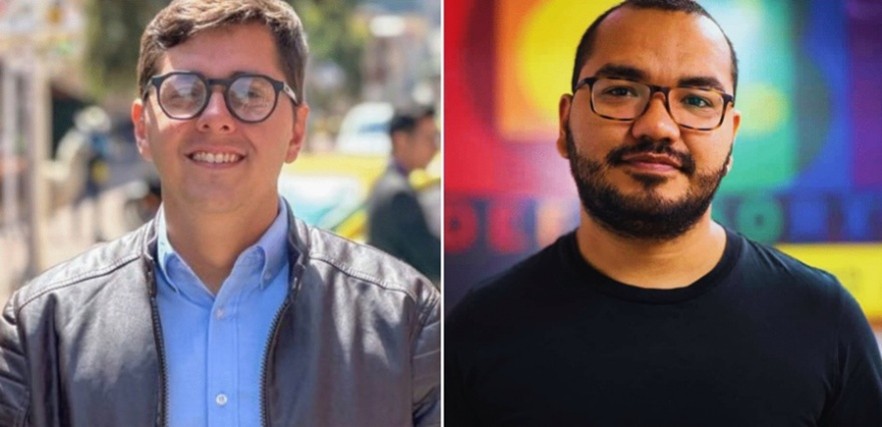
URGENT ACTION: On 13 October 2025, Yendri Velásquez and Luis Peche, Venezuelan human rights defenders, suffered an armed attack in Bogotá. Four months later, they continue to depend on temporary and insufficient protection measures, despite the National Protection Unit’s vow to implement comprehensive and stable protection measures after the attack. Amnesty is urging the Colombian authorities to ensure full and effective protection for Yendri and Luis. Please help us take action here: Urgent Action.
BRAZIL
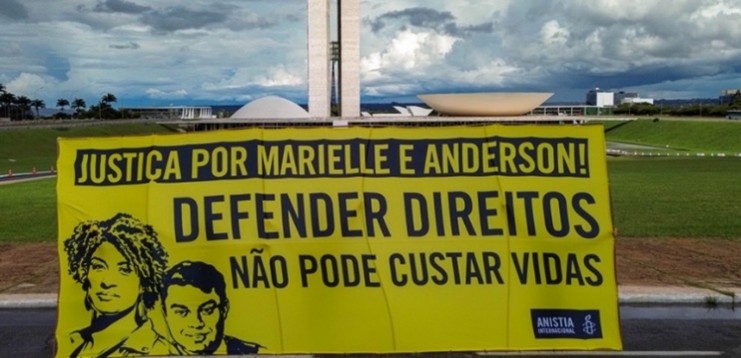
JUSTICE SERVED! After eight years of relentless campaigning, justice has finally been served! The masterminds behind the murder of human rights defender Marielle Franco, her driver Anderson Gomes, and the attempted murder of her aide Fernanda Chaves, have been sentenced to 76 years in prison, with fines and compensation to be paid to the families and survivors. Two military police officers (who worked with the masterminds) and the then chief of police and former secretary of the Civil Police of the state of Rio de Janeiro were also convicted.
During this trial, Amnesty International was cited for its mobilisation, especially for the welcome given by AI Spain to the survivor and her family. Many of you will have also contributed to this success! Thank you!
VENEZUELA
The Venezuelan authorities have now released a number of individuals on whose behalf Amnesty International has campaigned, including most recently Rocio San Miguel, Javier Tarazona, Eduardo Torres and Kennedy Tejeda. The Venezuelan government has also approved an “amnesty law” which would promise freedom for political prisoners. However, the NGO Foro Penal, amongst others, has expressed concerns over the scope of the amnesty, with only those arrested during a few months of the last 14 years of opposition to the government being eligible for release. Foro Penal notes that about 600 political prisoners remain behind bars.
Amnesty International has called on the Venezuelan authorities to allow the United Nations Fact-Finding Mission back into Venezuela. Human Rights Watch has called on the Venezuelan authorities to create the conditions for free and fair elections, review the composition of the Electoral Council and restore the independence of the judiciary.
ARGENTINA
The UN Committee on the Elimination of Discrimination against Women expressed its deep concern about the setbacks recorded since the end of 2023 regarding the rights of women and LGBTQ+ people in Argentina. It highlighted the closure and deterioration of key institutions, the rollback of public policies and the drastic reduction in the allocated budgets. It asked Argentina to provide written information within two years on how it implemented priority recommendations, including those related to access to legal and safe abortion, and policies for the prevention of gender-based violence.
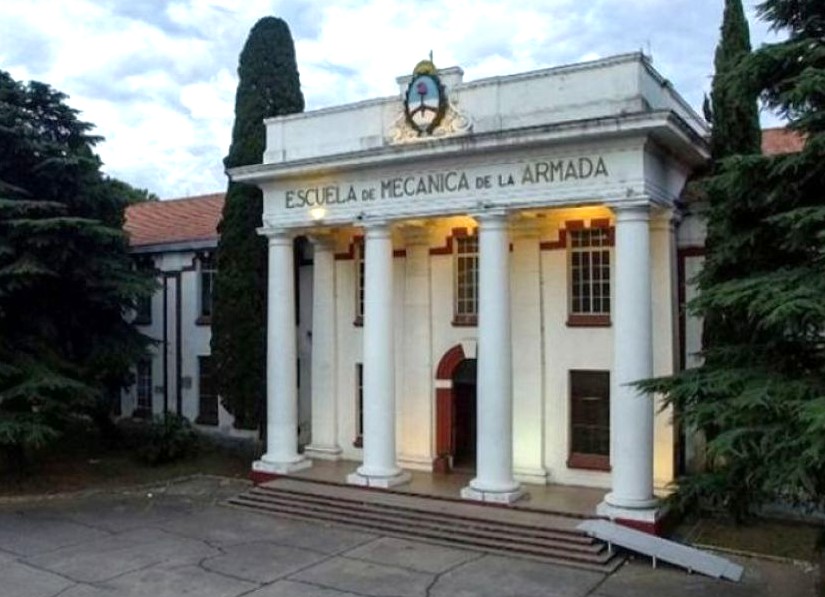
Commemorations are planned to mark the 50th anniversary of the military coup on March 24, 1976. This coincides with proposals to move the Human Rights Undersecretariat out of its current symbolic location at the former Escuela de Mecánica de la Armada (ESMA) clandestine detention centre. ESMA was the most famous of over 500 detention centres and is recognised as a UNESCO World Heritage site. In its World Report 2026, Human Rights Watch highlight that 1,202 people were convicted and 213 acquitted for crimes against humanity committed during the 1976-1983 dictatorship.
CHILE
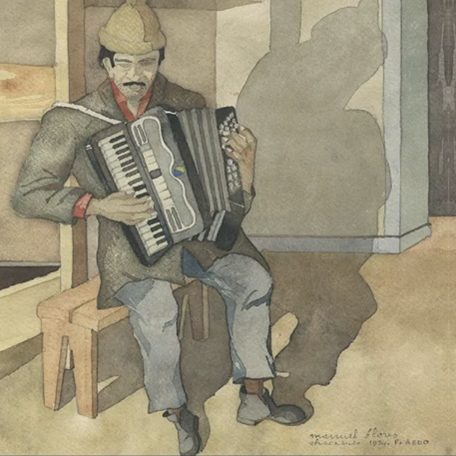
The Senate has begun discussing a Bill that would allow many prisoners, including those convicted of serious human rights violations, to serve part of their sentences under house arrest, which has triggered strong public and political backlash. The Chilean government and rights groups have warned that this proposal could place the country in conflict with its international human rights obligations. It also risks undermining justice for victims of dictatorship-era abuses by creating an avenue for early release or confinement at home.
AIUK South American Team, alongside the Embassy of Chile, jointly launched the book “Music and Political Imprisonment in Pinochet’s Chile” by Katia Chornik. Over 1,000 political imprisonment and torture centres existed across Chile during the military dictatorship led by Pinochet. Music was often present in those centres, both as a response to and part of human rights violations. The book explores the relationships between music, politics, memory and human rights, discussing a broad range of musical experiences and repertoire and how they are remembered, preserved and disseminated over the decades.
PERU
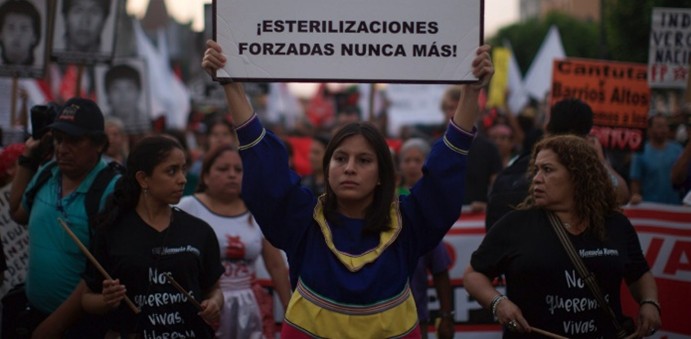
In a landmark ruling, the Inter-American Court of Human Rights (IAHCR) has held the Peruvian state “internationally responsible” for the death of one of its citizens, Celia Ramos, who died at the age of 34 in 1997 after undergoing sterilisation “under coercion”.
The ruling is the first on Peru’s forced sterilisation programme, which operated between 1996 and 2000 and was directed against poor, rural and Indigenous women. The court determined that Ramos “was pressured by health personnel to undergo a tubal ligation” in a makeshift facility that “did not have the necessary equipment or medications for proper risk assessment or to deal with emergencies”. Ramos, a mother of three girls, suffered a “severe allergic reaction” during the operation and died 19 days later.
OUR TEAM AND YOU
All the best,
South America Team – Carolina Beresford (Colombia and Brazil), David Rogers (Argentina and Chile), James Baird (Venezuela) and Graham Minter (the rest of South America). Don’t forget that you can follow us on Facebook and Twitter.