This month, we bring you news from:
- Colombia: There are two Urgent Actions, one calling for an investigation into threats and attacks against members of the NGO CREDHOS, the other calling for an investigation into crimes committed against women searchers.
- Ecuador: Amnesty has welcomed the Armed Forces’ apology for the “enforced disappearance” of four boys and called on the government to reverse its militarised approach to public security policy.
- Venezuela: Amnesty has called on the Venezuelan authorities and the international community to do all they can to provide relief to those affected by the recent earthquakes
- Argentina: Amnesty Argentina has filed a lawsuit to stop the application of a municipal protocol that hinders access to voluntary and legal abortion.
- Brazil: Amnesty Brazil has denounced the request to close the investigation into the death of human rights defender Pedro Henrique Cruz.
- Chile: Human rights organisations, victims’ groups and supporters have marched in Santiago to oppose proposals to pardon individuals convicted of human rights crimes.
- Peru: The UNHCR has urged the Peruvian government not to adopt a law that would enable human rights violations to be investigated and prosecuted by military jurisdictions.
- Bolivia: The IACHR has expressed concern over the escalation of social conflict and has called on the Bolivian State and all social sectors involved to prioritise dialogue.
COLOMBIA
URGENT ACTION #1: On 1 June, a leaflet supposedly signed by the armed group Autodefensas Conquistadoras de la Sierra Nevada (ACSN) was publicly distributed, declaring several people in Puerto Wilches to be “military objectives” of the group and ordering them to leave the municipality within 48 hours. Those threatened included members of CREDHOS’s municipal human rights committee.
This threat is one in a series of threats and attacks committed in recent months by armed groups in the Magdalena Medio region, including the Ejército Gaitanista de Colombia (EGC). These attacks have targeted members of CREDHOS and directly affected their work defending the human rights of communities across the municipalities of Santander, Bolívar and Antioquia that form part of the Magdalena Medio region.
Amnesty is calling on the Attorney General to investigate the threats and attacks against members of CREDHOS, establish who is responsible for ordering and carrying out these acts, and bring those responsible to justice in fair trials. Effective investigations are essential to prevent further attacks against human rights defenders in the Magdalena Medio region. Please click here to take action!
URGENT ACTION #2: On 8 June, human rights defender Cleiner Almanza was coerced into meeting with unknown individuals in an isolated area of Cartagena, where she was attacked, tortured, subjected to gender-based violence, and nearly killed. Cleiner is a woman searching for her brother, who was forcibly disappeared in 1998 in the Montes de María region, in northern Colombia. She is a recognised defender of women’s rights and has previously been attacked because of her work.
Amnesty is calling on the Attorney General’s Office to fulfil its commitment to women searchers by conducting a prompt, thorough, and effective investigation into the crimes committed against Cleiner Almanza. Please click here to take action!
ECUADOR
In a public ceremony in Guayaquil, the Commander General of the Ecuadorian Air Force, on behalf of the Armed Forces, publicly apologised to the families of Nehemías Arboleda Portocarrero, Steven Medina, Ismael Arroyo and Josué Arroyo, known as “the four boys from Las Malvinas,” who were victims of enforced disappearance by members of the Armed Forces in December 2024. This followed a historic ruling by the Constitutional Court which sentenced eleven military officers to 34 years and eight months in prison, as well as demanding reparation measures including a public apology.
Amnesty welcomed the implementation of the Court’s measures and reiterated its solidarity with the boys’ families and with all the families of the 51 people who disappeared following security operations. It regretted the lack of willingness by the Armed Forces to listen to the demands of the other families of disappeared people and expressed alarm at reports that military patrols had harassed a relative of one of the boys at her home. It called on the government to reverse its militarised approach to public security policy, which had led to serious human rights violations.
VENEZUELA
After the earthquakes that hit Venezuela on the 24 June, Amnesty has underlined the potentially devastating effects this disaster may have on the Venezuelan population and called on Venezuelan authorities and the international community to do all they can to provide relief to those affected. The full note can be read here: VENEZUELA: HUMAN RIGHTS MUST GUIDE EARTHQUAKE RESPONSE.
As the Venezuelan authorities have only disclosed limited information on the full extent of the earthquake damage, Amnesty has called on the authorities to ensure prompt and regular disclosure of information on the extent of the damage and the relief efforts being deployed. Amnesty has also called on the authorities to lift undue restrictions on press, social media, and online channels, so as to assist aid. The restrictions on non-governmental organisations should also be lifted, so as to allow groups to provide an effective relief response plan, and those who are in detention should be allowed to see their relatives and ensured their health needs are met.
ARGENTINA
The recent murders of two teenage girls in Argentina have reignited public outrage over gender-based violence. Thousands of protesters gathered for the annual Ni Una Menos (Not a single woman less) demonstration in Buenos Aires, marking 11 years since the movement began. Amnesty International Argentina warns of alarming setbacks in public policies aimed at preventing, addressing and eradicating gender-based violence: “Recognising femicide is key to understanding that these are not ordinary homicides, but rather structural violence that demands specific public policies.”
A proposed bill to address lobbying before Argentina’s Congress would place unreasonable burdens on independent human rights organisations and other civil society groups seeking to influence government policy, says Human Rights Watch. It would require individuals and organisations seeking to influence government decisions to register and disclose extensive information. Critics argue that the bill risks treating legitimate civil society engagement as suspicious activity, exposing campaigners to unnecessary monitoring and potential sanctions. They also warn that the proposal could create a system of permanent state surveillance and undermine democratic participation.
Amnesty International Argentina filed a lawsuit against the Municipality of San Isidro (Buenos Aires Province) to stop the application of a municipal protocol that hinders access to voluntary and legal abortion. They say the protocol imposes requirements (including mandatory psychological and social work consultations) beyond those set out in national law, causing delays. The protocol also restricts abortion services to a single hospital rather than allowing them to be provided through primary healthcare centres, creating unnecessary barriers to access.
BRAZIL
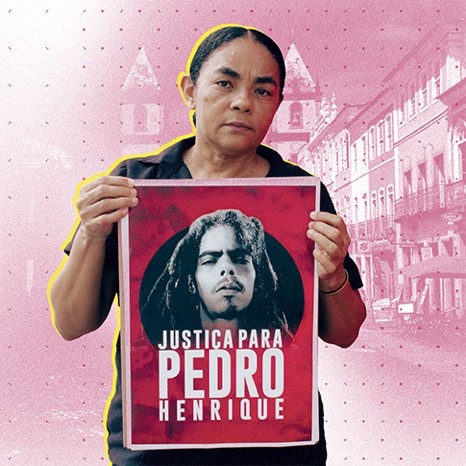
The Public Prosecutor’s Office of the State of Bahia (MPBA) has requested to close an investigation into the death of human rights defender Pedro Henrique Cruz, almost eight years after he was brutally murdered in 2018 in Tucano, Bahia. This decision represents another chapter in a process marked by the absence of effective responses from the Brazilian State to Pedro Henrique’s family and the inability of responsible institutions to guarantee truth, justice, and reparation.
The MPBA claims that it did not gather sufficient evidence to identify and hold the perpetrators of the crime accountable. However, this claim demands that the relevant institutions explain why the murder of a human rights defender remains unsolved after almost a decade of investigation. Amnesty International Brazil is mounting a coordinated public and institutional response to denounce the request to close the case. You can read more here.
CHILE
Human rights organisations, victims’ groups and supporters marched in Santiago in June to oppose proposals to pardon individuals convicted of human rights crimes, plus major budget cuts affecting state human rights programs and memory sites. They argued that the planned pardons would benefit offenders responsible for abuses during both the Pinochet dictatorship and the 2019 social unrest, undermining justice for victims. Protesters warned that granting clemency would violate Chile’s international human rights obligations and reinforce a culture of impunity.
The government has disbanded the Search Unit for Origins and Family Members of Individuals Affected by Illegal, Forced, or Irregular Adoptions (UBAFI), which was only established in February by the last administration. The resolution that created UBAFI included provisions for documentary searches, genetic analysis, coordination with consulates and embassies, legal assistance, and facilitation of family reunification and international cooperation. This comes weeks after a US citizen, given up for illegal adoption during the Pinochet dictatorship, was reunited with his Chilean biological mother.
PERU
The UN High Commissioner for Human Rights has urged the Peruvian government not to adopt a draft law that authorises military jurisdictions to investigate and prosecute possible human rights violations. The bill stipulates that crimes committed by police officers or military personnel while exercising their duties shall be exclusively handled by military or police jurisdictions rather than ordinary courts. The bill has raised significant concern and criticism, with experts citing fears of impunity and violations of internationally protected rights.
BOLIVIA
Bolivia is currently experiencing serious unrest with multiple protests in response to a deep economic crisis, political polarisation, perceptions of weakened trust between Indigenous and peasant sectors and the Government, as well as structural and systemic racism. The Inter-American Commission on Human Rights (IACHR) has expressed concern over the escalation of social conflict and has called on the Bolivian State and all social sectors involved to prioritise dialogue to address social demands and guarantee the legitimate exercise of the right to protest.
All the best,
South America Team – Carolina Beresford (Colombia and Brazil), David Rogers (Argentina and Chile), James Baird (Venezuela) and Graham Minter (the rest of South America). Please check out our website and our page on Amnesty UK’s recently-launched Community Platform, and don’t forget that you can follow us on Facebook and Twitter.