Best wishes for 2026. This month, we bring you news from Colombia, Brazil, Venezuela, Chile, Ecuador, Peru, and Argentina.
Highlights are:
- Colombia: Two Urgent Actions have been published; one regarding serious risks to the life, safety, and security of peasant community, the other following serious attacks on members of the Inter-Church Commission for Justice and Peace
- Brazil: Tens of thousands of women have marched in cities across Brazil, denouncing femicide and gender-based violence, after a series of high-profile cases.
- Venezuela: Amnesty International raises human rights concerns following US’s military action in Venezuela
- Chile: Amnesty International called on President-elect Kast and his administration to fulfil their human rights obligations in all their policies and government proposals.
- Ecuador: Authorities in Ecuador have used safeguards intended to prevent money laundering to freeze the bank accounts of Ecuadorian Indigenous and environmental groups.
- Peru: The Office of the High Commissioner for Human Rights has warned that a recently approved bill in Peru, that eliminates the concept of gender from legislation and public policy frameworks, could significantly undermine the country’s human rights protections.
- Argentina: A federal judge has annulled the “anti-picket” protocol that limited protesters’ actions and restricted the right to peaceful protest.
COLOMBIA
 Amnesty released two Urgent Actions relating to Colombia in December. The first regarding serious risks to the life, safety, and security of the peasant communities of El Porvenir and Matarratón; the second relating to serious attacks on members of the Inter-Church Commission for Justice and Peace while engaging in human rights defence activities in Southwest Colombia. Please take action here and here. You can also find the first of these on the AIUK site, where you will find a pro-forma letter and do an email action: https://www.amnesty.org.uk/urgent-actions/threats-against-community-leaders
BRAZIL
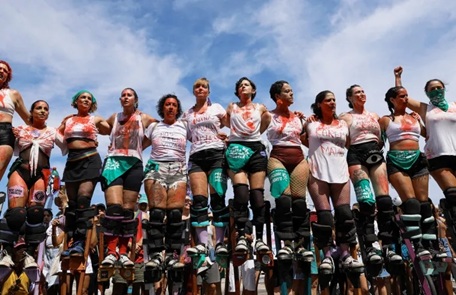
Tens of thousands of women have marched in cities across Brazil, denouncing femicide and gender-based violence, after a series of high-profile cases that shocked the country. Last year, 1,492 women were victims of femicide, the highest number since a law recognising the crime of femicide was introduced in 2015. More women are speaking out against violence targeting them. Read more here.
VENEZUELA
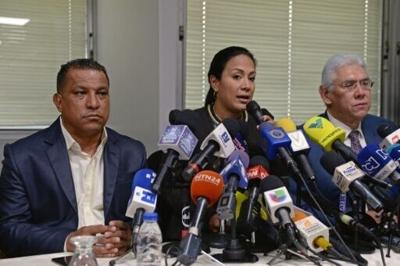
Amnesty International has issued a statement, saying the military action by the USA in Venezuela, which resulted in the capture of Nicolás Maduro and Cilia Flores, raises grave concerns for the human rights of the Venezuelan population. It most likely constitutes a violation of international law, including the UN Charter, as does the stated US intention to run Venezuela and control its oil resources. Amnesty International is particularly concerned about the risks of further escalation of human rights violations in the country, stemming either from additional US operations or from the Venezuelan government’s responses to the US attacks.
The United Nations has warned of the deteriorating human rights outlook in Venezuela, describing “radical” restrictions on freedoms, the growing militarization of public life, and an escalating pattern of arbitrary detentions. In his latest update in Geneva, the UN High Commissioner for Human Rights Volker Turk stated that conditions in Venezuela “have not improved” since his previous report earlier this year.
In Amnesty International’s response to the High Commissioner delivered in December, Amnesty notes new findings that the Bolivarian National Guard are involved in the commission of crimes against humanity. Amnesty has called on UN members states to use universal or other extraterritorial forms of jurisdiction to ensure that any alleged crimes are brought to justice.
The former opposition governor Alfredo Diaz died in prison in December, having been detained on charges of terrorism and incitement. He is reportedly the sixth opposition member to die in prison since November 2024. The non-governmental organisation Foro Penal states there are at least 997 political prisoners in Venezuela.
CHILE
Amnesty International called on President-elect José Antonio Kast and his administration to fulfil their human rights obligations in all their policies and government proposals. Kast, who takes office in March, campaigned for Pinochet in the 1988 referendum that ended the military regime. He has spoken in defence of Pinochet’s dictatorship and criticised memorials for victims. In 2017, he visited those imprisoned for human rights violations, saying, “vengeance prevails over justice.” Kast built his campaign on the claim that rising migration over the past decade had fuelled crime.
The National Institute for Human Rights (INDH) published its Annual Human Rights Report last month, a comprehensive overview of the country’s rights situation, and submitted it to President Boric, Congress, and the Supreme Court. This year, the INDH highlights systemic barriers to migrants’ access to basic services, social inclusion, legal protections, and economic opportunities. The report calls attention to ongoing discrimination affecting migrants’ access to employment, housing and health care, suggesting that Chile must improve human rights protections in its migration policies.
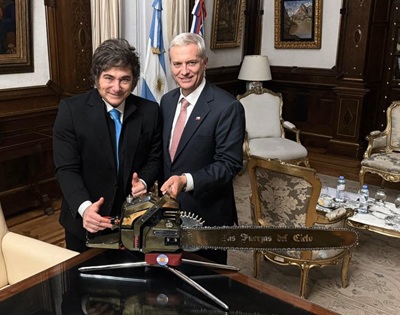
On International Migrants Day (December 18), Amnesty International was among more than 100 social organisations, academics, and migrants who delivered a letter with over 5,000 signatures to President Boric. This called for an urgent migrant regularisation process in Chile, to bring it in line with commitments made by the government, aiming to restore rights, strengthen social cohesion, and uphold expectations created by previous public policies. Two days earlier, President-elect Kast, during his meeting with President Milei, proposed a humanitarian corridor to facilitate the return of migrants to their countries of origin.
ECUADOR
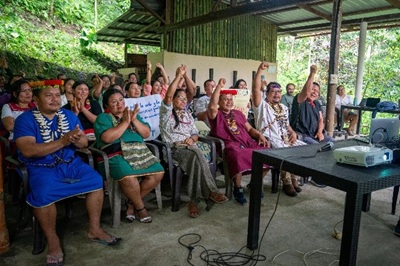
According to Human Rights Watch, authorities in Ecuador have used safeguards intended to prevent money laundering to freeze the bank accounts of Ecuadorian Indigenous and environmental groups. The decisions came as some Indigenous and environmental groups were protesting the government’s decision to scrap diesel subsidies and to greenlight a mining project in the southern province of Azuay. Judges lifted at least some of the bank freezes after authorities failed to disclose the evidence behind these decisions in court.
UN experts have warned that Ecuador’s decision to eliminate the Ministry of Women and Human Rights and merge it with the Ministry of Government represents a grave setback in the country’s international commitments to gender equality and human rights. The experts said that the Ministry of Women and Human Rights had played a crucial role in preventing and eradicating violence against women and girls, as well as other aims.
PERU
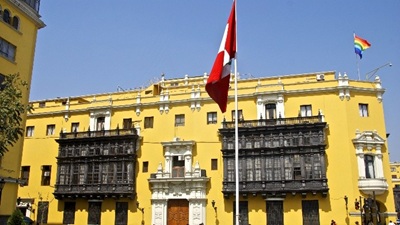 The Office of the High Commissioner for Human Rights (OHCHR) has warned that a recently approved bill in Peru that eliminates the concept of gender from legislation and public policy frameworks could significantly undermine the country’s human rights protections and violate its international legal obligations. The bill removes references to gender from Peru’s legal system and replaces them with the biological definitions of sex. According to the OHCHR, eliminating gender analysis can undermine Peru’s capacity to identify and respond to patterns of discrimination and violence.
ARGENTINA
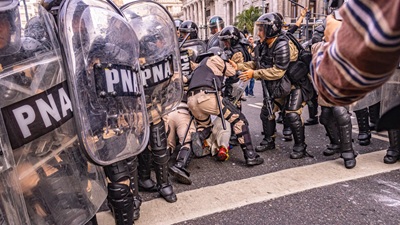
A federal judge has annulled the “anti-picket” protocol that limited protesters’ actions, restricting the right to peaceful protest. The ruling stated that the Security Ministry exceeded its authority by attempting to regulate fundamental rights through a ministerial resolution rather than Congress. Since the new rules were implemented, they have been used to justify violent police crackdowns against peaceful protests, resulting in injuries and arrests. Amnesty International (which was jointly behind the legal action) urges the national State to fully comply with the ruling, repeal the rules and practices that criminalise peaceful protest. The government immediately launched an appeal.
December 30th marked the 5th anniversary of the law which guarantees access to legal and voluntary abortion. Although the law brought undeniable progress in public health, Amnesty International is concerned that setbacks are evident. They received over 400 cases in 2025 regarding barriers to accessing abortion, triple the number of complaints registered in 2024. Since Javier Milei took office, sexual and reproductive health policies have been systematically dismantled. Women are encountering barriers where there should be care, support and guaranteed access.
Argentina is experiencing increasing gender-based violence, and Human Rights Watch urged the newly elected officials who took office last month to strengthen protections and violence prevention measures. They highlight that gender-based violence in Argentina is rooted in structural inequality and entrenched patriarchal norms, and the government has cut programs that sought to tackle the problem. Thirteen gender-related programs have been cut, dismissed as ideological, and the national budget for programs preventing and responding to gender-based violence fell 89% between 2023 and 2024.
Under the current government, Argentina has departed from its historic human rights positions in international forums and instead adopted “the global agenda of the far right,” according to a report by the Centre for Legal and Social Studies (CELS). Argentina has been a leading actor in the development of humanitarian international law and the defence of human rights for the past four decades. That legacy is now being “dismantled” as President Milei has made a sharp turn in Argentina’s human rights and memory policies. CELS noted that since Trump’s election, Argentina has changed its historic voting in certain areas to align with the United States.
South America Team – Carolina Beresford (Colombia and Brazil), David Rogers (Argentina and Chile), James Baird (Venezuela) and Graham Minter (the rest of South America). Please check out our website, and don’t forget that you can follow us on Facebook and Twitter.