This month we bring you news from Bolivia, Argentina, Chile, Peru, Ecuador, and Venezuela
Highlights are:
- Amnesty International Argentina released a report, “The Offensive Against LGBTI+ Rights in Argentina”, ahead of the November 2025 Pride march in Buenos Aires
- In Brazil, the global mining company BHP Group has been found liable for the deadly 2015 collapse of a Brazilian dam
- In Chile, ahead of the upcoming elections, Amnesty International has been trying to put human rights at the centre of the election debate, arguing that rights are not merely historical legacies tied to dictatorship-era abuses, but part of everyday life
- In Colombia, Colombia’s Military Criminal Justice system is playing a role in the persistent impunity for human rights violations and crimes under international law by members of the National Police and the Armed Forces
- For Ecuador, we are promoting action in support of the Warriors for the Amazon as part of this year’s Write for Rights Campaign.
- Venezuelan human rights group Provea has stated that recent months saw the highest level of repression since the start of tensions between the US and Venezuela.
ARGENTINA
Amnesty International Argentina released a report, “The Offensive Against LGBTI+ Rights in Argentina”, ahead of the November 2025 Pride march in Buenos Aires. The report (Spanish) warns of “an accelerated rollback of LGBTI+ rights.” It points to a combination of hostile official rhetoric, the dismantling of public policies, and an increase in violence and impunity. Amnesty described how “hateful narratives” have translated into concrete measures that “dismantle state structures of protection and inclusion,” creating a climate of “increased hostility.”
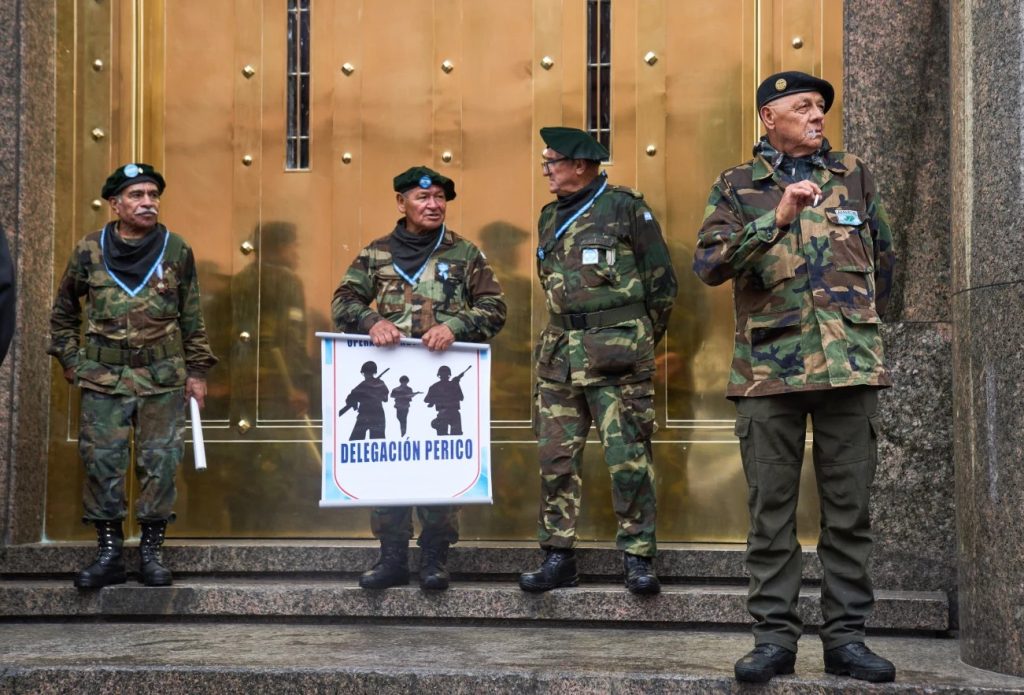
Ex-military officers who served in Argentina’s dictatorship and their families staged a rally to push for the release of fellow officers imprisoned for human rights abuses committed during the junta’s 1976-1983 rule. They gathered in Plaza de Mayo, the historic site of protests by women searching for children who had been abducted, detained and “disappeared” by the junta. Earlier in November, President Milei announced that the Defence Ministry will be led by a military officer for the first time since the return to democracy.
The United Nations Committee Against Torture concluded a review of Argentina’s periodic report under the Convention Against Torture. They praised some reforms, but raised serious concerns about “excessive use of force by the police against protesters” and reports of torture in detention facilities. They later published their findings, and urged Argentina to stop using police facilities for long-term detention and to reform protocols governing the use of force and less-lethal weapons, such as rubber bullets, tear gas and water-cannons – particularly given reports of “serious injuries caused by indiscriminate use” during demonstrations.
At the review in Geneva, Human Rights Undersecretary Alberto Baños drew criticism after denying the historically recognised figure of 30,000 kidnapped during the last civic-military dictatorship and attacking the country’s Human Rights organisations. Such a claim has never previously been stated by a public official at an international organisation. Baños also disputed the report’s findings and insisted that his government was committed to “complete, unbiased and unobtrusive historical memory.”
Amnesty International have just published Volume 3 of the Staying Resilient While Trying to Save the World series – “A Well-Being Workbook for Youth Activists”. This is co-created with child and youth activists and shaped by lived experiences. One of the contributors, 19 year old Paloma Navarro Candia, reflects on the situation in Argentina, where access to technology is still unequal, especially in rural or low-income areas. Many depend on public Wi-Fi or shared devices to study. The lack of comprehensive sex education leaves many adolescents vulnerable to misinformation about their rights and relationships.
BRAZIL
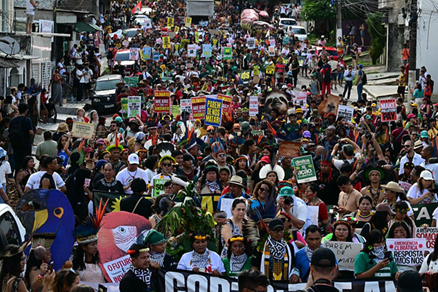
Leaders at COP30 in Brazil failed to agree to place people over profits as a lack of unity, accountability and transparency chipped away at delivering the urgent and effective climate action needed, though there were some bright spots. The fractious finale failed to garner consensus on a much-needed package including concrete plans for a fossil fuel phase out and an end to deforestation, as well as scaled up grants-based support for lower income countries.
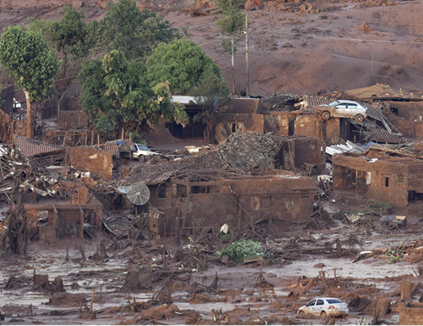
The global mining company BHP Group has been found liable for the deadly 2015 collapse of a Brazilian dam, in a landmark ruling that could pave the way for a multibillion-dollar payout. The collapse, which led to Brazil’s worst environmental disaster, unleashed tonnes of toxic waste into a major river, killing 19 people and devastating villages downstream. The trial, which began in October last year, was filed in Britain because one of BHP’s two main legal entities was based in London at the time.
CHILE
The presidential election runoff is set for December 14th. First round results showed strong support for right-leaning candidates, who have been promising internment camps, walls, trenches, and even land mines as measures to stop illegal migration. José Antonio Kast, now the favourite to be the next President, has centred his campaign on the mass deportation of 337,000 irregular migrants. Visiting the border with Peru, he warned undocumented immigrants, “If you don’t go on your own, we’ll detain you, we’ll expel you, and you’ll leave with only the clothes on your back.”
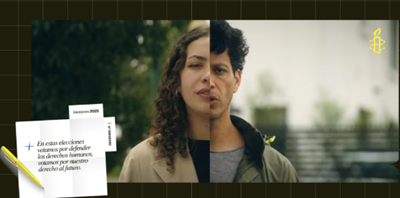
Amnesty International has been trying to put human rights at the centre of the election debate, arguing that rights are not merely historical legacies tied to dictatorship-era abuses, but part of everyday life. They launched “Right to the Future”, arguing, “true security is not built on fear, but on justice, equality, opportunity, and respect for human dignity. Security and human rights are not mutually exclusive: they are inseparable parts of the rule of law. Security cannot be hijacked by authoritarian rhetoric.”
Ecomemoria was launched in 2002 by Chilean exiles, with the planting of a tree (in Oxford) for Diana Frida Arón Svigilisky, a 24-year-old journalist who disappeared on 18 November 1974. After this, groups of Chileans around the world planted trees to embody the life, hopes and aspirations of each of the victims of the military dictatorship. They aim to plant 3,300 native trees, one tree for each victim of enforced disappearance and political execution during the dictatorship. They have just published their first newsletter.
COLOMBIA
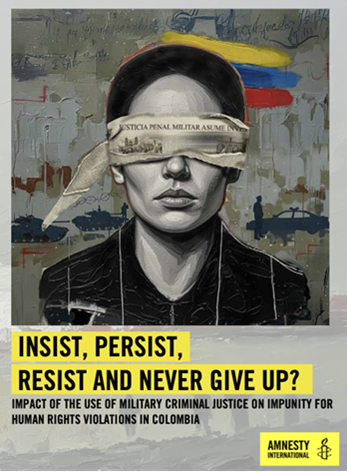
Colombia’s Military Criminal Justice system is playing a role in the persistent impunity for human rights violations and crimes under international law by members of the National Police and the Armed Forces. A new Amnesty International report finds that, contrary to international standards, military jurisdiction over such crimes continues to be debated; extraordinary measures are therefore required to guarantee the right to a fair trial for victims. Download and read the report here.
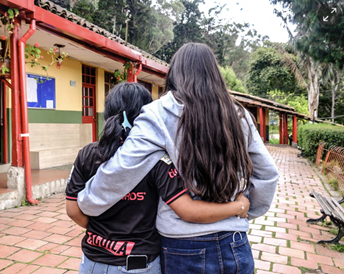
Militias are coercing, bribing and kidnapping young people in remote areas to be fighters, drug sellers, informants or sex slaves. While children have long been caught up in Colombia’s internal conflict, the tactics used to recruit them have changed, and documented cases of child recruitment into armed groups has risen from a few dozen in 2021 to more than 600 in 2024 – a figure experts say vastly underestimates the real toll as many families stay silent, afraid of the consequences if they speak out.
ECUADOR
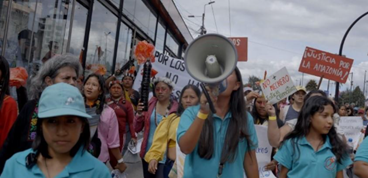 We hope you are successfully promoting action in support of the Warriors for the Amazon as part of this year’s Write for Rights Campaign. One of the members of the Warriors for the Amazon, Leonela Moncayo, attended COP 30 last month and demanded enforcement of the Ecuadorian court ruling that the Government must end gas flaring in the Ecuadorian Amazon. In an article published by Amnesty, she said: “Defending nature as young women has its consequences. When we try to give the world a true picture of the pollution and assault on human rights and nature, the first thing we get is criticism. Many do not want the truth to come to light. And it is worse when those of us speaking out are still legally children.”
VENEZUELA
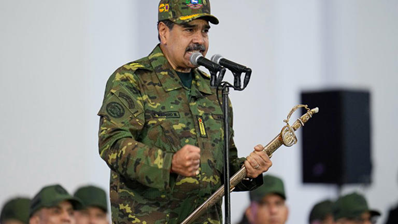
Venezuelan human rights group Provea has stated that recent months saw the highest level of repression since the start of tensions between the US and Venezuela. “This is a policy designed to instil fear among Venezuelans,” said Marino Alvarado, the NGO’s coordinator, who warned about worsening prison conditions, overcrowding, and punishments against political detainees. Vente Venezuela, the opposition movement, reports that in 2025 there has been one arbitrary detention every 32 hours, with 232 documented cases so far — 143 involving members of their movement. In 2024, the average was six arrests a day, totalling 2,500.
All the best,
South America Team – Carolina Beresford (Brazil and Colombia) David Rogers (Argentina and Chile), James Baird (Venezuela) and Graham Minter (rest of South America,). And please don’t forget that you can follow us on our Facebook page and Twitter.