This month, amongst other issues, we report on continuing concerns regarding the rights of indigenous peoples in Paraguay, Ecuador and Brazil. The killings of human rights defenders and community leaders and women’s rights in Colombia, threats to a journalist and prison violence in Brazil are also included. There is an urgent action relating to Paraguay and petitions regarding a case in Brazil and Amazonian women in Ecuador. There is also some welcome news relating to a report on Venezuela and positive news regarding Paraguay and Uruguay.
BRAZIL
An IACHR press release dated 1 July reports that, on June 9, The Intercept Brasil started publishing a series of leaks denouncing alleged irregularities in the so-called “Anti-Corruption Operation, Car Wash.” Immediately after the disclosure, journalist Glenn Greenwald became the target of offensive remarks, defamation, and death threats. The Special Rapporteur for Freedom of Expression and the Special Rapporteur on the Promotion and Protection of the Right to Freedom of Opinion and Expression express their concern over the threats, offensive remarks made by authorities and the intimidation against the journalist and his family, after the dissemination of information and press reports of public interest.
Survival International reported on 1 July that up to 10,000 gold miners have invaded Yanomami lands in northern Brazil, spreading malaria in the region and polluting many of the rivers with mercury.
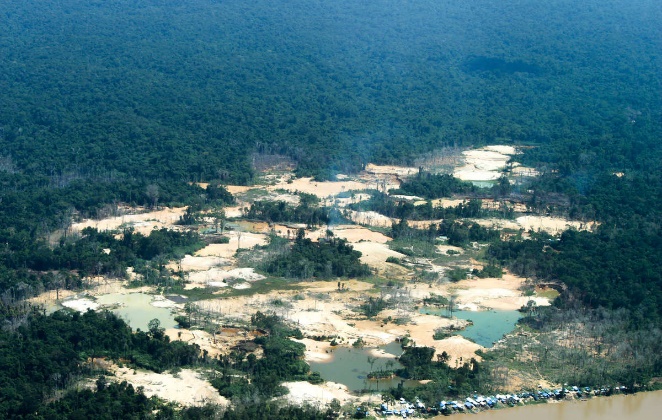
Although most Yanomami are in contact with non-indigenous society, one uncontacted group is known to live in the area being invaded, and authorities are investigating signs of up to six other uncontacted communities living there.
The massive influx has been blamed by local indigenous leaders for the deaths of four children already. They say the miners are building settlements and airstrips, emboldened by President Bolsonaro’s support for land invaders, and constant attacks on indigenous people.
One of the many illegal gold mining sites in the Yanomami territory
Some mining camps are just a few miles from uncontacted Yanomami. The Yanomami association Hutukara estimates the number of miners at up to 10,000. They also report devastation to the fish and game they rely on for their livelihood.
According to the Global Witness Report, Enemies of the State? How governments and business silence land and environmental defenders; published in July, there were at least twenty environmental activists murdered in Brazil in 2018, therefore Brazil has the fourth highest number of such crimes in the world.

Marielle Franco paid the ultimate price for defending human rights. On March 12, 2019, two people were arrested and accused of having participated in the killing of this human rights defender and city councillor, murdered on March 14, 2018. However, the intellectual authors, other potential facilitators, and the motivation for the crime have still not been identified.
There is an online petition targeting the Governor of Rio de Janeiro and the Prosecutor, both in charge of the investigations opened on the case. You can access it in English here. A further petition demanding a full, independent investigation into her murder addressed to the Brazilian president, Jair Bolsonaro can be accessed here.
The New York Times reported on 29 July that a fight between rival gangs in a prison in northern Brazil left at least 57 inmates dead, including at least 16 who were decapitated, according to prison officials. The clash in Pará State was the latest deadly outbreak of violence in Brazil’s overcrowded and riot-prone prisons, which have seen an increase in population in recent years without investment to match. [Read more…]
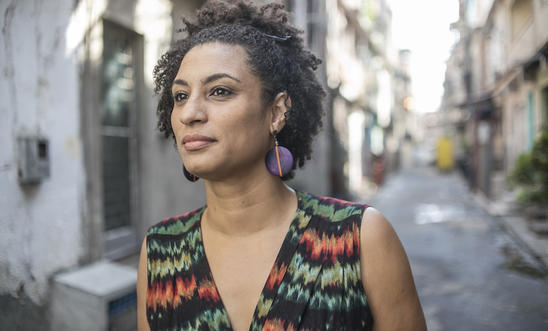 Marielle Franco was born and raised in a favela in Rio, Brazil. An elected councillor, she worked tirelessly to promote the rights of black women, LGBTI and young people.


 We held our third AmnesTea in our secretary Lucy Freeman’s garden at the end of June. The weather again stayed fair and, as requested, everyone overindulged in cake and hot beverages. This year we also had a second hand book stall which proved quite popular – most participants left with as many books as they’d tried to get rid of! We raised £167.62. Far more fun than doing a street collection, although you do gain more calories… Many thanks again to Lucy – we’re now left wondering what to do with all the leftover books?